AirTM P2P Cashout for GPT Earnings: How It Works and What It Costs
airtm
 VERIFIED 2026
Quick answer
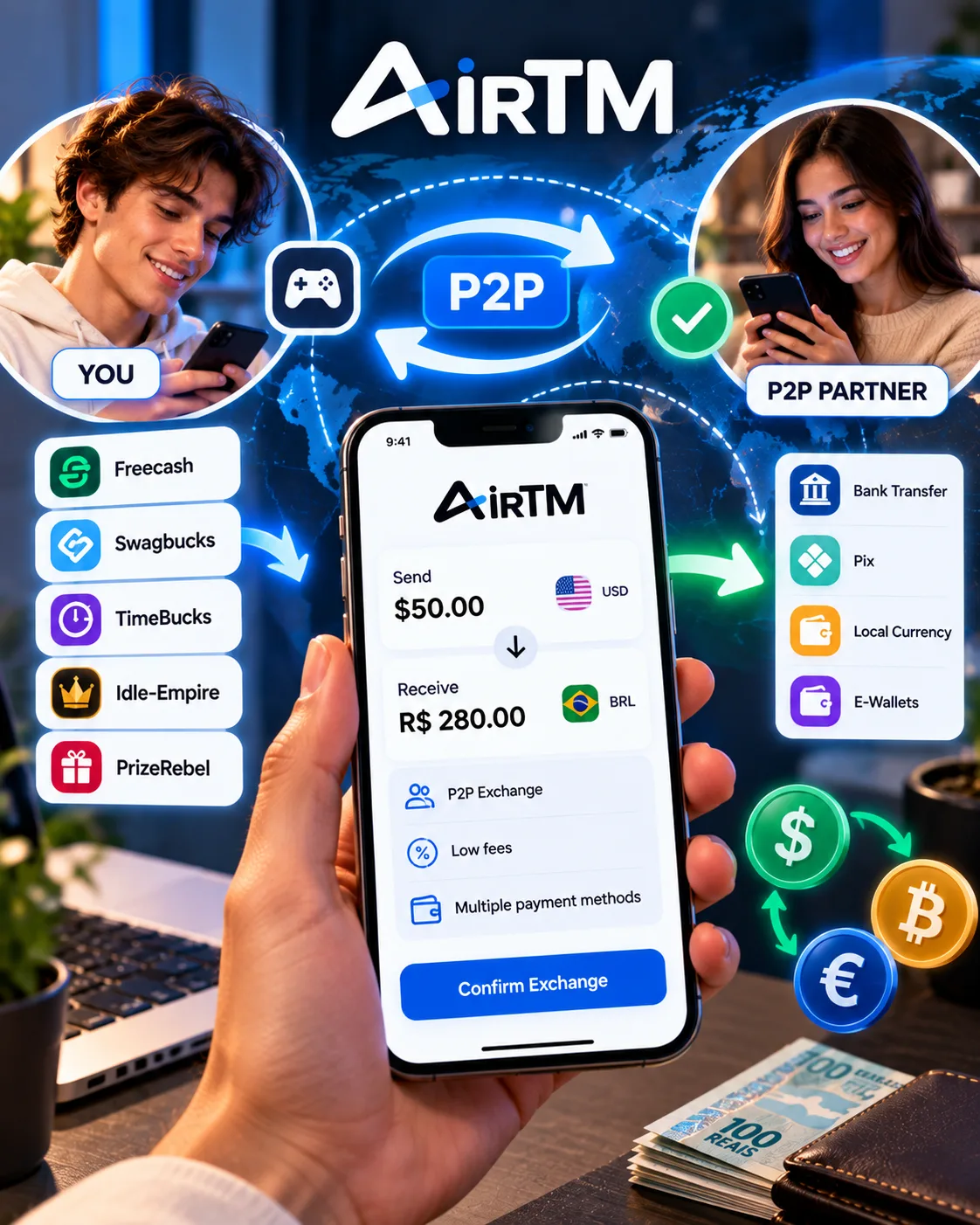
AirTM 's P2P cashout is the process of converting your USDC balance to local currency by matching you with a verified "cashier" who sends you money through a local payment method — bank transfer, mobile money, or cash pickup.
The critical detail most users miss: the cashier has 12 hours to send the local currency after accepting your withdrawal request. If they do not complete the transfer within that window, the transaction can be canceled or enter mediation. For GPT site users receiving small payouts in countries where PayPal is restricted, the P2P network is often the only way to access their earnings in local currency.
Why GPT Site Users Need the P2P Network
Most GPT site payouts arrive as USDC in your AirTM balance. To use that money, you need to convert it to your local currency. AirTM offers two routes: direct withdrawals and the P2P network.
Direct withdrawals are faster and cheaper, but they are only available in a limited set of countries. According to AirTM's published support documentation, as of January 2025, AirTM offers direct withdrawals to banks and mobile wallets in these markets: Argentina, Bolivia, Brazil, Chile, Colombia, Costa Rica, Mexico, Paraguay, Peru, Uruguay, Ecuador, Panama, Egypt, Kenya, Morocco, Nigeria, India, Bangladesh, the Philippines, and Turkey.
If you are outside those countries, the P2P network is your only cashout route. Even inside those countries, the P2P network may offer better rates for specific payment methods or larger amounts.
For a full review of how AirTM works as a GPT payout destination, including the 3-attempt KYC limit and the account block risk, see our AirTM review for GPT site payouts.
How the P2P Cashout Works: Step-by-Step
The P2P process has five stages, each with its own time limit. Understanding the stages matters because the money can get stuck at any of them.
Stage 1: You request a withdrawal
In the AirTM app, you tap "Withdraw," select your local payment method, enter the amount you want to receive in local currency, and confirm. AirTM shows you the total cost — including the service fee, escrow fee, and the cashier's commission — before you confirm.
At this point, the USDC you want to withdraw is deducted from your available balance and held in escrow. You cannot use it for anything else until the transaction completes or is canceled.
Stage 2: A cashier accepts the request
Your withdrawal request appears in the P2P marketplace. A verified cashier accepts it. The waiting time for acceptance varies — it can be minutes, hours, or in rare cases longer, depending on your payment method and the time of day.
Once a cashier accepts, AirTM gives them a deadline to complete the transfer. According to AirTM's transaction terms, for withdrawal requests, that deadline is 12 hours.
Stage 3: The cashier sends the local currency
The cashier sends the money to the bank account or mobile wallet details you provided. The cashier then marks the transaction as "payment sent" in the AirTM chat.
You receive a notification. You need to check your bank or mobile wallet to verify the money has arrived.
Stage 4: You confirm receipt
Once you confirm the money is in your account, you tap "Transfer Received" in AirTM. This releases the escrowed USDC to the cashier. The transaction is complete.
If you do not confirm receipt within a certain window, which AirTM specifies as typically 6 hours after the cashier marks the transaction as sent, the transaction may enter mediation.
Stage 5: Dispute resolution (if needed)
If the cashier does not send the money, or you do not confirm receipt, the transaction enters mediation. AirTM's mediation team reviews the transaction chat and any additional evidence to determine the rightful owner of the escrowed funds.
For a detailed guide on mediation, see our AirTM verification guide.
What the P2P Cashout Actually Costs
AirTM does not publish a fixed fee table for P2P transactions because the rates are dynamic. The total cost has three components:
| Fee component | Type | Who charges it | Typical range |
|---|---|---|---|
| Service fee | Percentage | AirTM | Dynamic; based on your historical activity |
| Escrow fee | Fixed | AirTM | Small fixed amount |
| Variable peer commission | Percentage | Cashier | 1%–5% |
| Fixed peer commission | Fixed | Cashier | Applies to some payment methods |
These typical ranges are based on AirTM's published documentation and common user reports; actual fees vary by country, amount, and cashier.
The formula AirTM publishes for P2P withdrawals is: Funds to receive = (Funds to send × (1 − service fee − variable peer commission) − escrow − fixed peer commission) × market exchange rate.
The service fee and variable peer commission are percentage-based. The escrow fee and fixed peer commission are flat. On small withdrawals — which is what most GPT site users receive — the flat fees represent a larger share of the total cost.
For a full breakdown of AirTM fees on typical GPT payout amounts, see our AirTM fees explained guide.
The 12-Hour Window: What Happens If the Cashier Does Not Send
This is the single most important number for GPT site users cashing out through the P2P network: according to AirTM's terms, the cashier has 12 hours to send the local currency after accepting your withdrawal request.
If the cashier does not complete the transfer within 12 hours, the transaction is automatically canceled or enters mediation, depending on which party needs to act. Your escrowed USDC is returned to your available balance if the transaction is canceled.
AirTM also specifies a 6-hour window in the opposite direction: if the cashier cancels the transaction and you have not notified payment, the funds are returned to the cashier after 6 hours.
In practice, most P2P transactions complete in minutes to a few hours. The 12-hour window is a maximum, not a typical duration. But for GPT users who need the money quickly, the possibility of waiting up to 12 hours is a real constraint.
For a comparison of how AirTM's P2P timing compares to PayPal and Wise, see our AirTM vs PayPal comparison.
What the Escrow Actually Protects You From
The escrow system is AirTM's core security mechanism for P2P transactions. When a cashier accepts your withdrawal request, AirTM holds the USDC you are trying to convert. The cashier does not receive the USDC until you confirm that you have received the local currency.
This protects you from the most obvious risk: a cashier accepting your request, receiving the USDC, and then disappearing without sending the money. The escrow prevents that.
What the escrow does not protect you from:
- A cashier who sends the wrong amount. If the cashier sends less than agreed, the mediation team will review the transaction, but the process takes time.
- A cashier who sends the money from a third-party account. This is called "payment triangulation" and is prohibited. If the cashier uses someone else's account to send you money, the transaction may be flagged and your own account may be penalized.
- Payment method issues on your side. If your bank account details are incorrect, the cashier may send the money to the wrong account, and the escrow will not protect you from your own error.
For a broader look at AirTM's security and regulation, see our AirTM review for GPT site payouts.
How Mediation Works When Something Goes Wrong
Mediation is AirTM's dispute resolution process. It begins when one party confirms they have transferred funds and the other party does not confirm receipt, or when the transaction remains incomplete past the allowed timeframe.
The mediation team reviews the transaction chat and any additional evidence — bank statements, screenshots, receipts — to determine the rightful owner of the escrowed funds. The team contacts both parties through the transaction chat to request and verify information.
According to AirTM's support documentation, most mediations are resolved within minutes. More complex cases can take up to 24 hours. If a breach is identified and sufficient evidence is not provided, the transaction is canceled and the escrowed funds are returned to the appropriate party.
Tips to avoid mediation:
- Communicate with the cashier through the transaction's internal chat only. Do not use external messaging apps.
- Check your email and the in-app notification bar for updates.
- Read all instructions before confirming any transaction.
- Only confirm receipt when you are certain the money has arrived in the selected payment method.
- Do not log out while a transaction is in progress.
- Process transactions as quickly as possible to avoid complications from external factors.
If you notice any issues with the transaction or the other user, contact support through the chat icon in the app.
When the P2P Network Makes Sense — and When It Does Not
The P2P network makes sense if:
- You live in a country where direct withdrawals are not available (outside the 20 countries listed above)
- You need to cash out to a local payment method that AirTM's direct withdrawal system does not support
- Your GPT platform supports AirTM directly (ySense, TimeBucks, Clickworker, Remotasks)
- You are willing to accept variable fees and the possibility of waiting up to 12 hours for the cashier to send
The P2P network does not make sense if:
- You live in Germany, France, the UK, or another market where Wise and SEPA transfers work well. Wise is cheaper and more predictable for USD-to-EUR conversions.
- You need the money immediately. The P2P process depends on cashier availability, which can vary by time of day and country.
- You cannot afford to have your USDC held in escrow while the transaction completes.
- You are in a country where direct withdrawals are available. According to AirTM's fee schedule, direct withdrawals are faster and cheaper ($50 + 1% for bank transfers, or 0.5% for crypto).
For a full list of GPT sites that support AirTM, see our guide to GPT sites that pay via AirTM.
Frequently Asked Questions
How does AirTM's P2P cashout work?
You request a withdrawal in the AirTM app, AirTM holds your USDC in escrow, a verified cashier accepts the request and sends local currency to your bank or mobile wallet, and you confirm receipt to release the escrowed funds to the cashier.
How long does a P2P cashout take?
Most P2P transactions complete in minutes to a few hours. According to AirTM's terms, the cashier has a maximum of 12 hours to send the local currency after accepting your withdrawal request. If they do not complete the transfer within that window, the transaction can be canceled or enter mediation.
What happens if the cashier does not send the money?
If the cashier does not send the money within the 12-hour window, the transaction enters mediation. AirTM's mediation team reviews the transaction chat and evidence to determine the rightful owner of the escrowed funds. Most mediations are resolved within minutes; complex cases can take up to 24 hours, according to AirTM's support documentation.
Is the escrow safe?
Yes. The escrow holds your USDC until you confirm receipt of the local currency. The cashier does not receive the USDC until you confirm. This protects you from the most obvious risk of a cashier taking the money and disappearing.
How much does the P2P cashout cost?
The total cost includes AirTM's service fee (dynamic percentage), the escrow fee (fixed amount), and the cashier's variable and fixed commissions (typically 1% to 5%). As an example, on a $25 payout, the total cost typically ranges from about $0.75 to $1.25 depending on the cashier and your country.
Can I use the P2P network in Germany or France?
Technically yes, but the P2P network is not the best choice for users in Germany, France, or other EU markets. Wise and SEPA transfers are cheaper and more predictable. The P2P network is more relevant for users in LATAM, Africa, and parts of Asia where direct withdrawals are not available.
What is payment triangulation?
Payment triangulation is when a cashier sends you money from a third-party account that does not match their own verified details. This is prohibited on AirTM. If it happens, the transaction may enter mediation and both accounts may be penalized.
Get the Ultimate GPT Insider Guide🚀
Learn how survey disqualifications work and proven ways to qualify for more studies. 100% Free.
LootHub.org
Recommended posts
Continue with these related reward guides.
 VERIFIED 2026
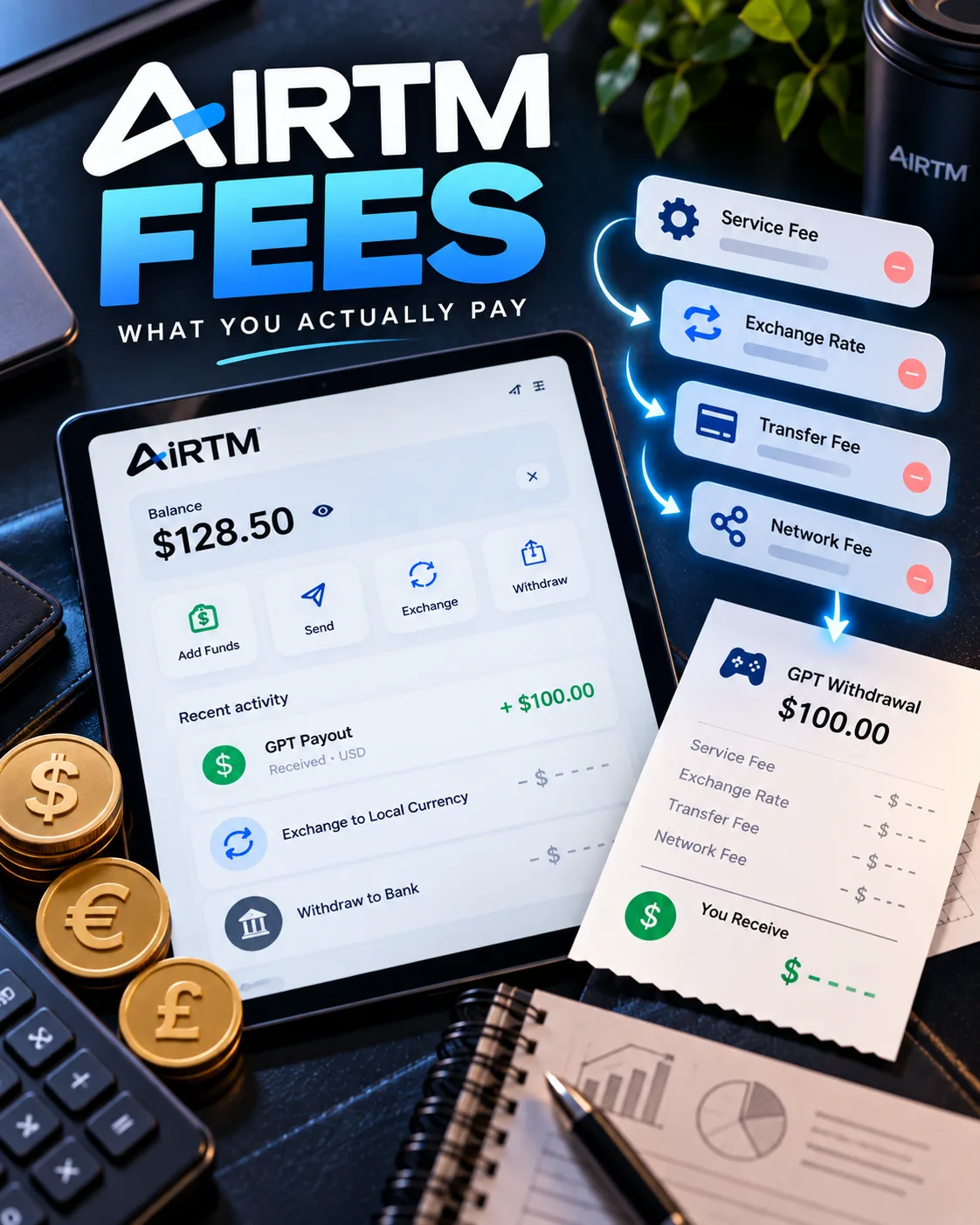
AirTM Fees Explained: What You Actually Pay on GPT Withdrawals
 VERIFIED 2026
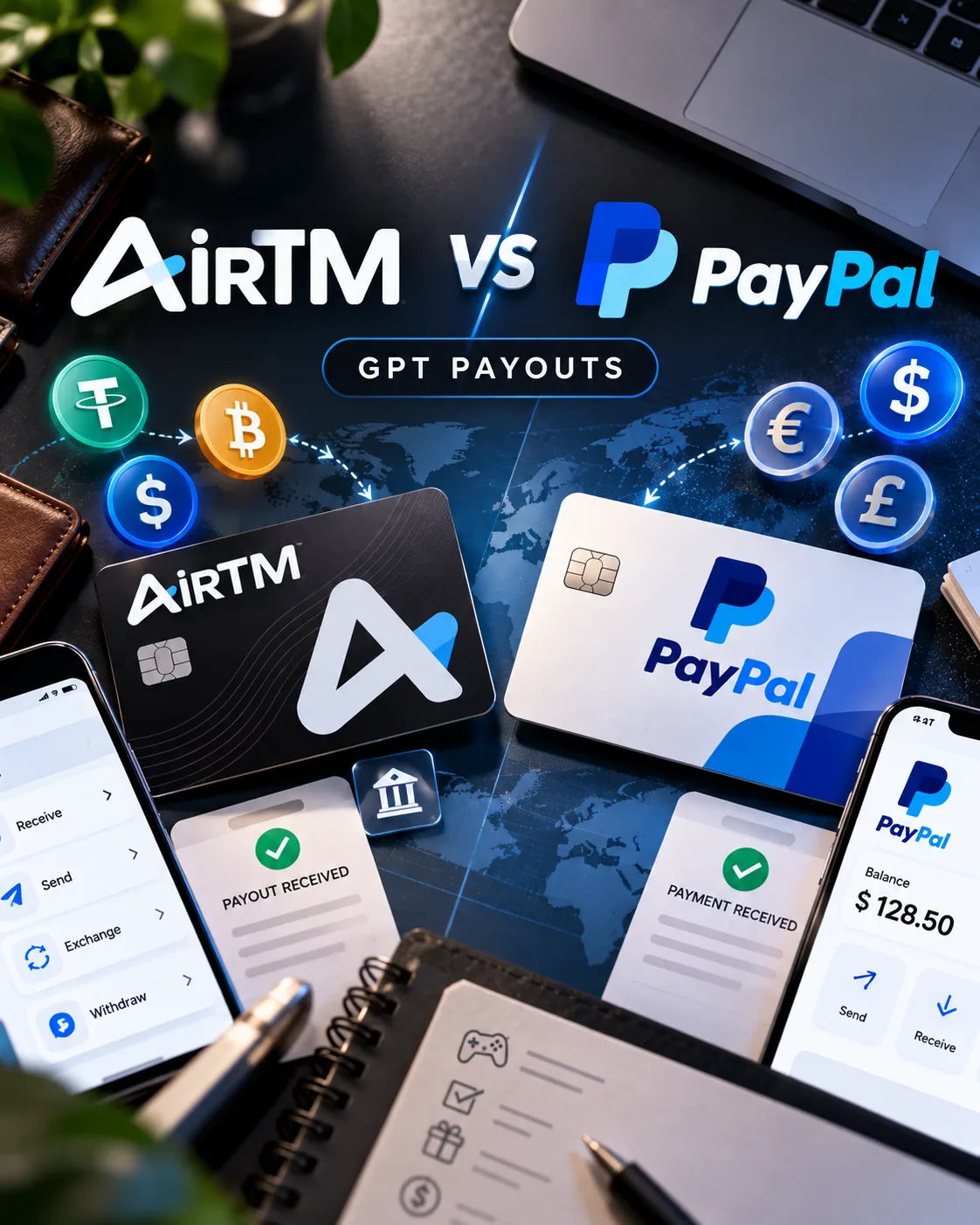
AirTM vs PayPal for GPT Payouts: Which One Should You Use?
 VERIFIED 2026
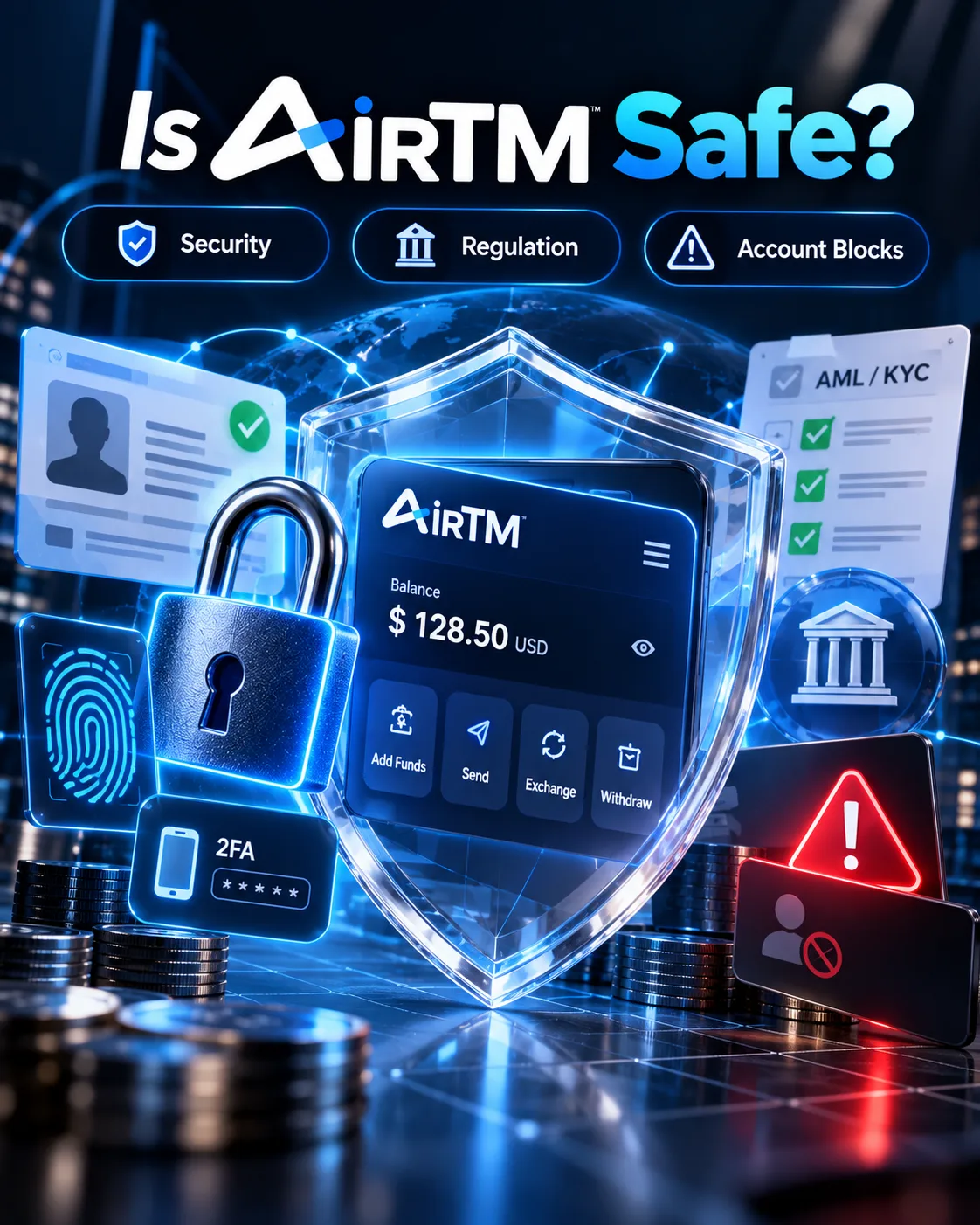
Is AirTM Safe for GPT Site Earnings? Security, Regulation & Account Blocks
 VERIFIED 2026
How to Receive GPT Site Payouts in AirTM: Step-by-Step Guide
 VERIFIED 2026
AirTM Account Verification for GPT Users: Documents, Attempts & Delays
 VERIFIED 2026