Crypto Payouts on GPT Sites 2026: Volatility, Fees & Tax Traps to Know
FreeCash
 VERIFIED 2026
Quick answer
Crypto payouts on GPT sites are worth it when you want the lowest possible withdrawal threshold, zero platform fees, and instant processing. They are risky when you do not understand the tax implications, cannot secure a wallet, or plan to convert to fiat immediately. The platforms that do it best are Freecash (crypto from $0.10), JustPlay (Bitcoin payouts), and EarnLab (Litecoin from $0.10). The platforms where crypto makes less sense are those with high network fees relative to your withdrawal amount, or where you are not comfortable managing a private key.
The crypto option looks like a clear upgrade on paper. No 5% fee as Freecash states for PayPal payouts. No $5 minimum. No waiting for bank transfers. But there is a catch that most GPT sites do not advertise prominently: every crypto withdrawal is a taxable event in most jurisdictions, and the volatility between withdrawal and conversion can wipe out the gains you just spent hours earning. This guide explains exactly how crypto payouts work on GPT sites, when they make sense, and when PayPal or a bank transfer is still the smarter choice.
How Crypto Payouts Work on GPT Sites
Crypto payouts work like any other withdrawal method — you accumulate a balance on a GPT site, request a withdrawal, and choose a cryptocurrency instead of PayPal or a gift card. The platform sends the crypto to a wallet address you provide.
The key difference from fiat payouts is what you receive. With PayPal, you receive dollars or euros. With crypto, you receive a digital asset that fluctuates in value every second. You can hold it, convert it to a stablecoin, or sell it for fiat — but each of those actions has its own cost and tax implication.
The platforms that support crypto payouts fall into three categories:
- Freecash: Freecash's documentation states that crypto withdrawals start at $0.10. Supported coins include Bitcoin, Ethereum, Litecoin, and others. No platform fee on crypto — only the blockchain network fee. Processing usually takes up to one hour.
- JustPlay: JustPlay's payout information indicates that Bitcoin payouts are available alongside PayPal and gift cards. The minimum is approximately $2 via PayPal, and Bitcoin is one of the few crypto options in the passive gaming category.
- EarnLab: EarnLab advertises Litecoin cashouts starting at $0.10, with instant payments available. This is one of the lowest thresholds in the industry.
Other platforms like PrizeRebel, TimeBucks, and ySense offer crypto in some regions according to publicly available information, but the availability varies by country and the coins supported are often limited to Bitcoin or Litecoin.
Crypto vs PayPal vs Bank Transfer: The Real Comparison
The right withdrawal method depends on what you value: speed, cost, or simplicity. Here is how the three main options compare on the major GPT platforms. Figures below reflect commonly stated platform terms and typical processing times, but always check the current payout page before withdrawing.
| Factor | Crypto | PayPal | Bank Transfer / SEPA |
|---|---|---|---|
| Minimum withdrawal (Freecash) | $0.10 | $5 | ~$20 |
| Platform fee | None (network fee only) | 5% | 5% |
| Processing time | Up to 1 hour | Instant to 30 min | Up to 5 business days |
| Volatility risk | High | None | None |
| Tax complexity | High | Low | Low |
| Wallet required | Yes | No | No |
| Best for | Small withdrawals, crypto-native users | Speed and simplicity | Large withdrawals in Europe |
The fee difference is the most concrete advantage. Freecash's published terms state a 5% fee on PayPal and bank transfers but no platform fee on crypto — only the blockchain network fee, which on Litecoin or Solana can be a fraction of a cent. On a $100 withdrawal, that is $5 saved compared to PayPal. On a $10 withdrawal, it is $0.50 saved — less meaningful, but still real.
The threshold difference matters more for casual users. Freecash's publicly listed minimums show $0.10 for crypto and $5 for PayPal. The crypto minimum means you can withdraw after completing a single small offer. The PayPal minimum requires accumulating ten times as much before you can access your money. For users who want to cash out frequently and avoid letting a balance sit on a platform, crypto is the only option that makes this practical.
The processing time advantage is smaller than it looks. Freecash crypto withdrawals can take up to an hour, while PayPal withdrawals on the same platform are usually processed instantly or within 30 minutes. JustPlay's PayPal cashout is even faster — 15 minutes to 1 hour — and its Bitcoin payout follows a similar timeframe according to the platform's documentation.
The Risks of Crypto Payouts That GPT Sites Do Not Advertise
The crypto option sounds strictly better until you factor in the risks. Here is what most GPT sites do not explain clearly.
Volatility Between Withdrawal and Conversion
When you withdraw $10 in Bitcoin, you do not have $10. You have a quantity of Bitcoin worth approximately $10 at the moment of withdrawal. If Bitcoin drops 5% before you convert it to fiat, you now have $9.50. If it drops 20% — which happens regularly — you have $8.
This matters most for small withdrawals. A $5 crypto payout that loses 10% of its value before conversion is worth $4.50. The 5% fee you avoided on PayPal would have cost you $0.25. In this scenario, crypto was the worse choice.
The fix is to convert immediately upon receipt. Most wallets and exchanges allow instant conversion to a stablecoin like USDC or USDT, which is pegged to the dollar and does not fluctuate. But conversion itself is a taxable event, and the exchange may charge a spread or a small fee.
Taxable Events at Every Step
In the US, UK, Canada, and Australia, receiving crypto as payment is a taxable event. The IRS treats cryptocurrency as property, and receiving it as income means you owe tax on the fair market value at the time of receipt. If you later sell or exchange that crypto, any change in value is a separate capital gain or loss.
The practical implication is that you need to track three things: the value of the crypto when you received it, the value when you converted or sold it, and any fees paid. For a $10 withdrawal, this is manageable. For a user making frequent small withdrawals across multiple platforms, the record-keeping burden adds up quickly.
In the UK, HMRC has explicitly warned that side hustle income — including crypto — above £1,000 per year must be declared, and crypto gains are subject to Capital Gains Tax. In Canada, the CRA treats crypto as a commodity, and most transactions fall under barter rules, meaning the value exchanged must be reported in Canadian dollars. In Australia, the ATO requires all crypto transactions to be recorded in AUD at market value at the time of the transaction, with staking and airdrop rewards treated as ordinary income.
Wallet Security and Key Management
Crypto payouts require a wallet address. If you use a custodial exchange wallet, you are trusting a third party to hold your funds. If you use a self-custody wallet, you are responsible for securing your private key. Lose the key, lose the funds. Get phished, lose the funds. Send to the wrong address, lose the funds permanently.
For a $5 withdrawal, the security overhead is disproportionate. For a user withdrawing regularly and accumulating a meaningful balance, the security requirements become serious. Most GPT sites do not provide guidance on wallet security, which leaves the responsibility entirely with the user.
When Crypto Is the Better Choice
Crypto is the better choice in four specific scenarios:
- You want to withdraw below the PayPal minimum. If your balance is $1 or $2, PayPal is not an option on most platforms. Crypto lets you access that money immediately.
- You are already a crypto user. If you have a wallet, understand the tax implications, and regularly convert between assets, the additional steps are not a burden. You are already tracking your transactions.
- You want to avoid the 5% platform fee on large withdrawals. On a $100 withdrawal, the 5% saved on PayPal is $5. On a $500 withdrawal, it is $25. The savings become meaningful at higher amounts.
- You want to hold crypto as an investment. If you believe the asset will appreciate and you are comfortable with the volatility, receiving crypto instead of fiat lets you skip the buying step. But this is an investment decision, not a withdrawal strategy.
When PayPal or Bank Transfer Is Still Better
PayPal or bank transfer remains the better choice in these scenarios:
- You need the money in fiat immediately. If you are withdrawing to pay a bill or cover an expense, PayPal delivers dollars or euros. Crypto delivers an asset you still need to convert.
- You are withdrawing small amounts regularly. The tax record-keeping and conversion spread on frequent $1–$5 crypto withdrawals can outweigh the fee savings.
- You are not comfortable with wallets and keys. The learning curve is real, and a mistake can be permanent. PayPal is simpler and safer for users who do not want to manage private keys.
- You live in a country where crypto is heavily regulated or restricted. Some jurisdictions make it difficult to convert crypto to fiat or impose high taxes on crypto transactions. In those cases, PayPal or SEPA is more practical.
Which GPT Sites Offer the Best Crypto Payout Options?
The following table summarizes publicly available payout information as of 2026 and may change. Always verify current terms on each platform before withdrawing.
| Platform | Crypto Supported | Minimum | Platform Fee | Processing Time | Best For |
|---|---|---|---|---|---|
| Freecash | Bitcoin, Ethereum, Litecoin, others | $0.10 | None | Up to 1 hour | Lowest threshold, no platform fee |
| JustPlay | Bitcoin | ~$2 (PayPal equivalent) | None stated | 15 min – 1 hour | Passive gaming with Bitcoin option |
| EarnLab | Litecoin | $0.10 | None stated | Instant | Lowest crypto minimum in category |
| PrizeRebel | Bitcoin | $5 (varies by region) | None | Varies | Bitcoin cashouts with other options |
| TimeBucks | Various | $10 | Varies | Varies | More reward options overall |
Freecash is the strongest option for crypto withdrawals because it combines the lowest threshold with the widest range of supported coins and no platform fee. JustPlay is the best choice for passive gamers who want a Bitcoin option without leaving the app.
PrizeRebel supports Bitcoin but has a higher minimum and does not publish a clear crypto fee structure according to its current documentation. TimeBucks offers crypto but with a $10 minimum, which makes it less attractive for frequent small withdrawals.
Taxes on Crypto Payouts: A Country-by-Country Overview
The tax treatment of crypto payouts varies significantly by jurisdiction. Here is the basic framework for the four major English-speaking markets.
United States
The IRS treats cryptocurrency as property. Receiving crypto as payment for services is taxable as ordinary income at the fair market value on the date of receipt. If you later sell or exchange the crypto, any change in value is a capital gain or loss.
United Kingdom
HMRC has warned that side hustle income above £1,000 per year — including crypto — must be declared, and crypto gains are subject to Capital Gains Tax. If you receive crypto as payment, the value at the time of receipt is taxable income, and any subsequent disposal is a CGT event.
Canada
The CRA treats cryptocurrency as a commodity. Earning crypto is subject to income tax, and the value must be reported in Canadian dollars at the time of receipt. If you are earning regularly with profit intent, the income is business income reported on Form T2125. Capital gains are 50% taxable.
Australia
The ATO requires all crypto transactions to be recorded in Australian dollars at market value at the time of the transaction. Income from crypto — including GPT site earnings — is generally treated as ordinary income and reported under "Other income." If you later dispose of the crypto, a capital gain or loss may apply.
Frequently Asked Questions
Are crypto payouts on GPT sites worth it?
They are worth it if you want the lowest withdrawal threshold, want to avoid the 5% platform fee on PayPal, or are already comfortable with crypto and understand the tax implications. They are not worth it if you need fiat immediately, are withdrawing very small amounts regularly, or are not prepared to manage a wallet and track taxable events.
Which GPT site has the lowest crypto withdrawal minimum?
Freecash and EarnLab both offer crypto withdrawals starting at $0.10, according to their respective payout pages. EarnLab uses Litecoin, which has lower network fees than Bitcoin. Freecash supports a wider range of coins including Bitcoin and Ethereum.
Does Freecash charge a fee on crypto withdrawals?
No, according to Freecash's published fee schedule. Freecash charges a 5% fee on PayPal, Venmo, and bank transfers, but does not charge a platform fee on crypto withdrawals. You only pay the blockchain network fee, which varies by coin and congestion.
Can I withdraw Bitcoin from JustPlay?
Yes. JustPlay's payout documentation states that Bitcoin payouts are supported alongside PayPal and gift cards. The minimum is approximately $2 (based on the PayPal equivalent), and payouts process in 15 minutes to 1 hour.
Do I have to pay taxes on crypto payouts from GPT sites?
Yes, in the US, UK, Canada, and Australia. Receiving crypto as payment is a taxable event. You owe income tax on the fair market value at the time of receipt, and any subsequent sale or exchange may trigger a capital gain or loss. The record-keeping requirements are more complex than for PayPal payouts.
Is it better to withdraw in Bitcoin or Litecoin?
Litecoin is generally better for small withdrawals because network fees are lower. Bitcoin fees can be significant relative to a $1 or $2 withdrawal, especially during periods of network congestion. If your platform supports Litecoin or Solana, those are usually the more cost-effective options for small amounts.
What happens if the crypto price drops before I convert it?
You lose money relative to the fiat value at the time of withdrawal. If you withdraw $10 in Bitcoin and the price drops 10% before you convert, you receive $9. The fix is to convert to a stablecoin (USDC, USDT) immediately upon receipt, which locks in the value.
Can I use a custodial exchange wallet for GPT site payouts?
Yes, but it adds counterparty risk. If the exchange freezes withdrawals or goes bankrupt, you may lose access to your funds. For small amounts, the risk is manageable. For larger balances, a self-custody wallet is safer — but only if you secure your private key properly.
Bottom Line
Crypto payouts on GPT sites are not universally better or worse than PayPal. They are a tool with specific advantages and specific costs. The advantages are clear: the lowest possible withdrawal threshold ($0.10 on Freecash and EarnLab), no platform fees, and the ability to withdraw after a single small offer.
For users who want to cash out frequently and avoid letting balances accumulate, crypto is the most practical option. For users who need fiat immediately or are withdrawing small amounts they do not want to track for tax purposes, PayPal remains simpler. The best approach is to understand your own priorities: are you optimising for access and fee savings, or for simplicity and predictability? Crypto wins on the first. PayPal wins on the second.
If you are new to crypto, start with a small withdrawal — $1 or $2 — to test the process, understand the conversion workflow, and see how the tax implications apply to your situation. Do not commit to crypto payouts for a large balance until you have walked through the full cycle at least once.
Get the Ultimate GPT Insider Guide🚀
Learn how survey disqualifications work and proven ways to qualify for more studies. 100% Free.
LootHub.org
Recommended posts
Continue with these related reward guides.
 VERIFIED 2026
Crypto Payouts on GPT Sites: Freecash, Idle-Empire & More Compared (2026)
 VERIFIED 2026
GPT Site KYC Failed? What Actually Causes Rejection (and What to Do)
 VERIFIED 2026
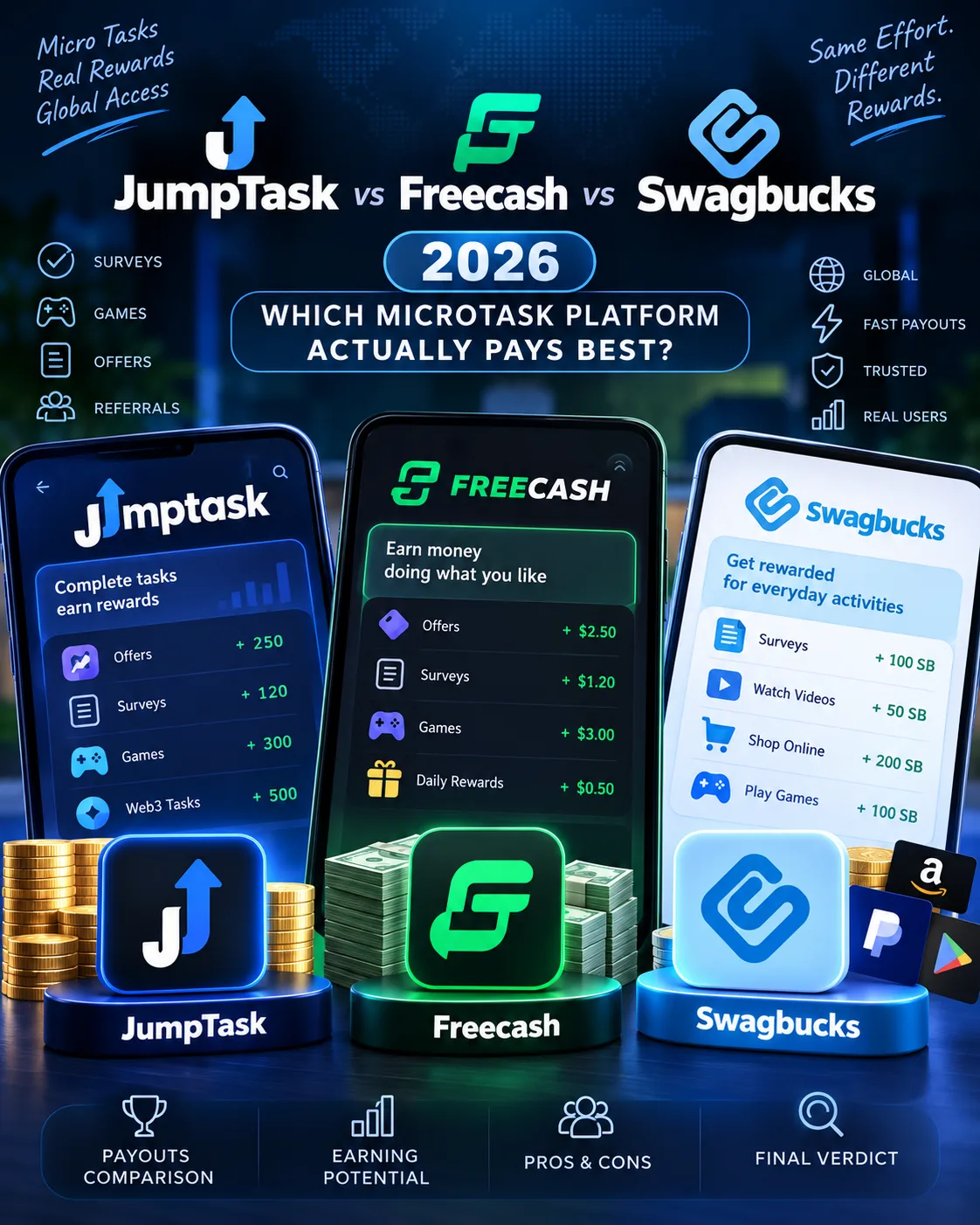
JumpTask vs Freecash vs Swagbucks 2026: Which Microtask Platform Actually Pays Best?
 VERIFIED 2026