Is Honeygain Safe? Data Privacy, Bandwidth Risks & What You Should Know (2026)
 VERIFIED 2026
Quick answer
The researchers who conducted the investigation found no evidence that Honeygain knew how those connections were being used. Honeygain is not a criminal operation. It built a business selling access to your internet connection and, as far as anyone can tell, does not screen what happens to that access afterward. That distinction matters. Honeygain is not malicious. But the model it operates — renting out your IP address to unknown third parties — carries risks that no privacy policy can fully eliminate.
What Honeygain Says It Does (and Does Not Do)
Honeygain's official position is clear: it never collects personal data, never accesses files, cookies, or browsing history, and never uses more than 10% of your available bandwidth. The app operates as a "network conduit" — it routes encrypted traffic but cannot inspect, decrypt, or store the data that passes through.
The company has taken steps to back up those claims. In 2025, Honeygain joined AMTSO (Anti-Malware Testing Standards Organization), an industry group focused on security and transparency. It also complies with GDPR and CCPA by design, and it uses a firewall, anti-cheat system, and two-factor authentication to protect user accounts.
What Honeygain does do is route traffic. Your device becomes an intermediary, and third-party traffic appears under your IP address. That is the core of the service — and the core of the risk.
The 2026 Investigations: What Researchers Found
In June 2026, the Digital Citizens Alliance and cybersecurity firm risk3sixty published the results of a months-long investigation into residential proxy networks. The researchers installed Honeygain, monitored their own connection for several days, and tracked what traffic passed through.
What they found was significant. The connections made through the shared bandwidth included traffic linked to Tinkoff Bank (now operating as T-Bank), an institution sanctioned by the U.S. Treasury Department. The researchers concluded that T-Bank or a reseller working on its behalf was paying to route its traffic through an ordinary household's internet connection. They also observed connections to entities in China and Russia.
To Honeygain's credit, the investigators found no evidence that the company knew how its network was being used. Trend Micro reached the same conclusion in earlier research, documenting "shady and outright malicious activity" moving through these networks with no sign anyone was screening what got sent out. Trend Micro's term for this category of software is "riskware" — not quite malware, but software that offloads its risk onto you without ever showing you that risk exists.
The researchers tested seven companies that sell residential proxy access and found that, on average, 85% of the connections being sold had already been flagged for fraud or suspicious activity. Over 80% of those flagged connections traced back to homes rather than data centers.
Separately, in March 2026, the FBI issued a general warning about residential proxy networks, noting that many hosts are unaware their IP is being used to mask criminal activity. This warning was not specific to Honeygain, but it applies to the entire category of "passive income" apps that route traffic through residential IPs.
I did not experience any of this firsthand during my six months of testing. I did not see my IP get blacklisted, and I did not encounter any legal issues. But the possibility exists, and it is not something a user can fully control once the app is installed.
What Are the Actual Risks?
The risks of running Honeygain fall into four categories. None are guaranteed to happen, but all are possible.
1. IP Reputation Degradation
When your IP address is used to route third-party traffic, it can get flagged by fraud detection systems. The practical consequences are annoying rather than dangerous: more frequent CAPTCHA challenges, blocked access to some websites or APIs, and potential email delivery issues if you run mail or web services.
2. Legal Attribution Risk
This is the most serious risk, and it is the one the FBI warning addresses. If criminal activity is routed through your IP address, the digital trail leads back to your name, not to whoever paid for the access.
The probability of this happening to any individual user is low. But the consequence — being investigated for activity you did not commit — is severe. The researchers' term for this is "digital blood diamonds": connections that may have been gathered deceptively and sold through layers of intermediaries, leaving the end user holding the risk.
3. ISP Contract Violations
In many countries, residential internet contracts prohibit sharing your connection with third parties. In France, SFR, Free, Bouygues, and Orange all include clauses in their terms of service that forbid the resale or sharing of connection data. An operator can suspend or terminate your contract if you are caught doing so.
Check your contract before installing Honeygain. If your ISP enforces this clause, you could face consequences ranging from a warning to service termination.
4. Malware Distribution Risk
This is not a risk of Honeygain itself, but of how proxyware is sometimes distributed. In July 2025, security researchers documented cases where attackers used NodeJS backdoors to install and monetize proxy applications, including Honeygain, without the user's knowledge. In these cases, the threat actor installed Honeygain's "hgsdk.dll" and registered a launcher named "FastCleanPlus.
If you download Honeygain from the official website or app stores, this is not a concern. The risk arises when proxyware is bundled with other software or installed through malicious channels.
How to Check If Your IP Is Already Being Used as a Proxy
If you have ever installed a free VPN, a "share your connection" app, or a streaming device that claimed to provide free content, your IP may already be part of a residential proxy network — with or without your knowledge. You can check this for free:
- Spur.us/me: A free public tool that checks whether your home IP address is currently registered as a proxy node.
- GreyNoise IP Check: A similar tool that analyzes your IP for suspicious activity flags.
- IPinfo.io/what-is-my-ip: Scroll to the privacy section to see if your IP is flagged as a residential proxy.
What Honeygain Does Right on Privacy
To be fair to Honeygain, the company has taken meaningful steps to address security concerns. These are not marketing claims — they are verifiable measures:
- AMTSO membership: Honeygain joined the Anti-Malware Testing Standards Organization in 2025, signaling a commitment to independent security testing and transparency.
- No data collection: The app does not request names, email addresses, or phone numbers. It does not access files, cookies, or browsing history. This is stated in the privacy policy and confirmed by independent scans.
- GDPR and CCPA compliance: Privacy laws are embedded into the SDK by design, not added as an afterthought.
- Encrypted traffic: The connection Honeygain uses is encrypted and inaccessible to outsiders.
- AppEsteem compliance: Honeygain SDK has published a compliance report with AppEsteem, a certification organization focused on ethical software behavior.
These measures do not eliminate the risks of routing third-party traffic. But they do show that Honeygain is not indifferent to security. The company is not hiding what it does — it is selling access to your connection, and it is transparent about that.
Practical Recommendations for Reducing Risk
If you decide to use Honeygain despite the risks, here is how to minimize your exposure:
- Use a dedicated device. Run Honeygain on an old phone or tablet that you do not use for banking, email, or work. This isolates the risk from your primary digital life.
- Use a separate network. If possible, run Honeygain on a separate internet connection — a mobile hotspot or a guest network — so your primary IP reputation is not affected.
- Do not use it on your primary IP. Your home internet connection is the one tied to your name. If something goes wrong, that is the connection that will be investigated.
- Check your ISP contract. Before installing, verify that your contract does not prohibit sharing your connection with third parties. In Germany, France, and Brazil, many do.
- Monitor your IP reputation. Use Spur or GreyNoise periodically to check whether your IP has been flagged. If it has, consider uninstalling Honeygain.
- Do not use it on a work or school network. Masaryk University in the Czech Republic explicitly bans proxyware on its network after detecting several devices involved in DDoS attacks against Czech organizations. The consequences can include loss of network access and disciplinary action.
- Uninstall if you have concerns. If you are not comfortable with the risks, uninstall Honeygain. The few dollars per month are not worth the potential legal or reputational consequences.
FAQ
Does Honeygain access my files or browsing history?
No. Honeygain does not request permissions to access files, cookies, or browsing history. The app operates as a network conduit and cannot inspect or decrypt the traffic that passes through it. This is stated in the privacy policy and confirmed by independent scans.
Is Honeygain safe to use on my primary device?
Honeygain does not access your files, but it does route third-party traffic through your IP address. If you use your primary device for banking, work VPNs, or anything that requires a clean IP reputation, it is safer to use Honeygain on a dedicated device and a separate network.
What did the 2026 investigations find?
In June 2026, the Digital Citizens Alliance and risk3sixty found that traffic routed through Honeygain included connections to entities in China and Russia, including a bank sanctioned by the U.S. Treasury Department. The researchers found no evidence that Honeygain knew how the connections were being used.
Can I use Honeygain on a work or school network?
No. Many organizations prohibit proxyware on their networks. Masaryk University in the Czech Republic banned it after detecting devices involved in DDoS attacks. Using Honeygain on a work or school network can result in disciplinary action and loss of network access.
What is the FBI warning about residential proxies?
In March 2026, the FBI issued a general warning that residential proxy networks, including apps like Honeygain, can be used to mask criminal activity. The warning noted that many hosts are unaware their IP is being used for this purpose, and that criminal activity can be attributed to the homeowner's connection.
Does Honeygain encrypt my traffic?
Yes. Honeygain encrypts the connection it uses to route traffic. However, encryption does not change the fact that third-party traffic appears under your IP address. The risk is not about data interception — it is about attribution.
What is "riskware"?
Riskware is a term coined by Trend Micro to describe software that is not malware but offloads its risk onto the user without showing that risk. Honeygain falls into this category: it is not malicious, but it routes unknown traffic through your connection, and the consequences of that traffic fall on you.
Can I check if my IP is being used as a proxy?
Yes. Spur.us/me, GreyNoise IP Check, and IPinfo.io/what-is-my-ip all offer free tools to check whether your IP address is currently registered as a proxy node. If it is flagged, consider uninstalling Honeygain.
Final Verdict
But the model is inherently risky. You are renting out your IP address to unknown third parties, and you have no control over what they do with it. Investigations in 2026 found connections to sanctioned entities through the network. The FBI has warned about the category of apps Honeygain belongs to. And the legal trail, if something goes wrong, leads back to your name.
If you have an old device and a separate internet connection, and you are comfortable with the risks, Honeygain can be a reasonable way to earn a few dollars per month. If you are using it on your primary device and your home internet connection, the trade-off is not worth it. The $5 to $15 per month you might earn is not worth the potential legal or reputational consequences of having your IP associated with activity you did not commit.
For a full breakdown of what Honeygain actually pays, see our Honeygain review. For a comparison with other bandwidth-sharing apps, see our Honeygain vs EarnApp vs PacketStream analysis.
Get the Ultimate GPT Insider Guide🚀
Learn how survey disqualifications work and proven ways to qualify for more studies. 100% Free.
LootHub.org
Recommended posts
Continue with these related reward guides.
 VERIFIED 2026
Is Honeygain Safe? Real Earnings, Legal Risks & Better Alternatives (2026)
 VERIFIED 2026
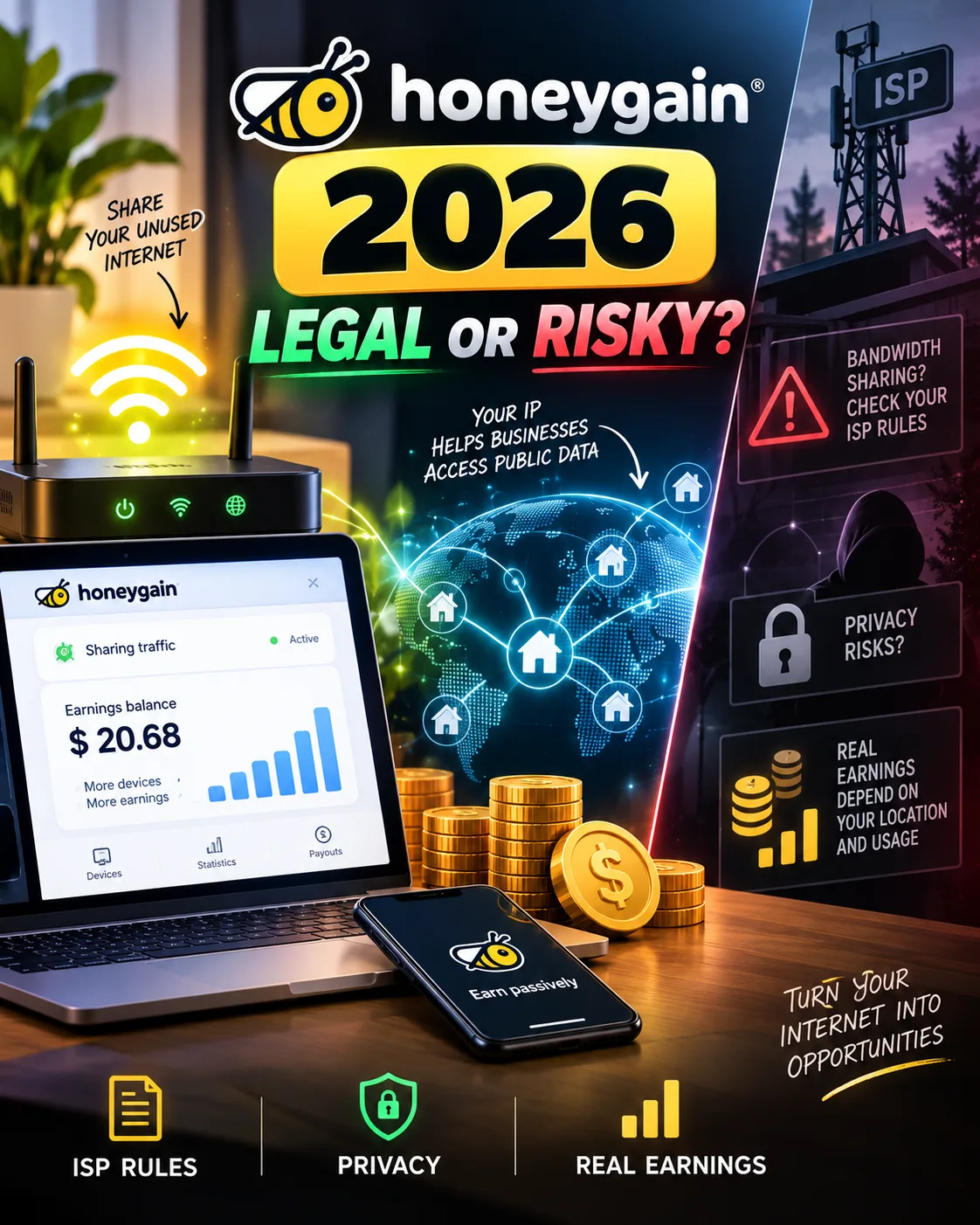
Honeygain & Your ISP 2026: Contract Clauses, Legal Grey Areas and What to Check
 VERIFIED 2026
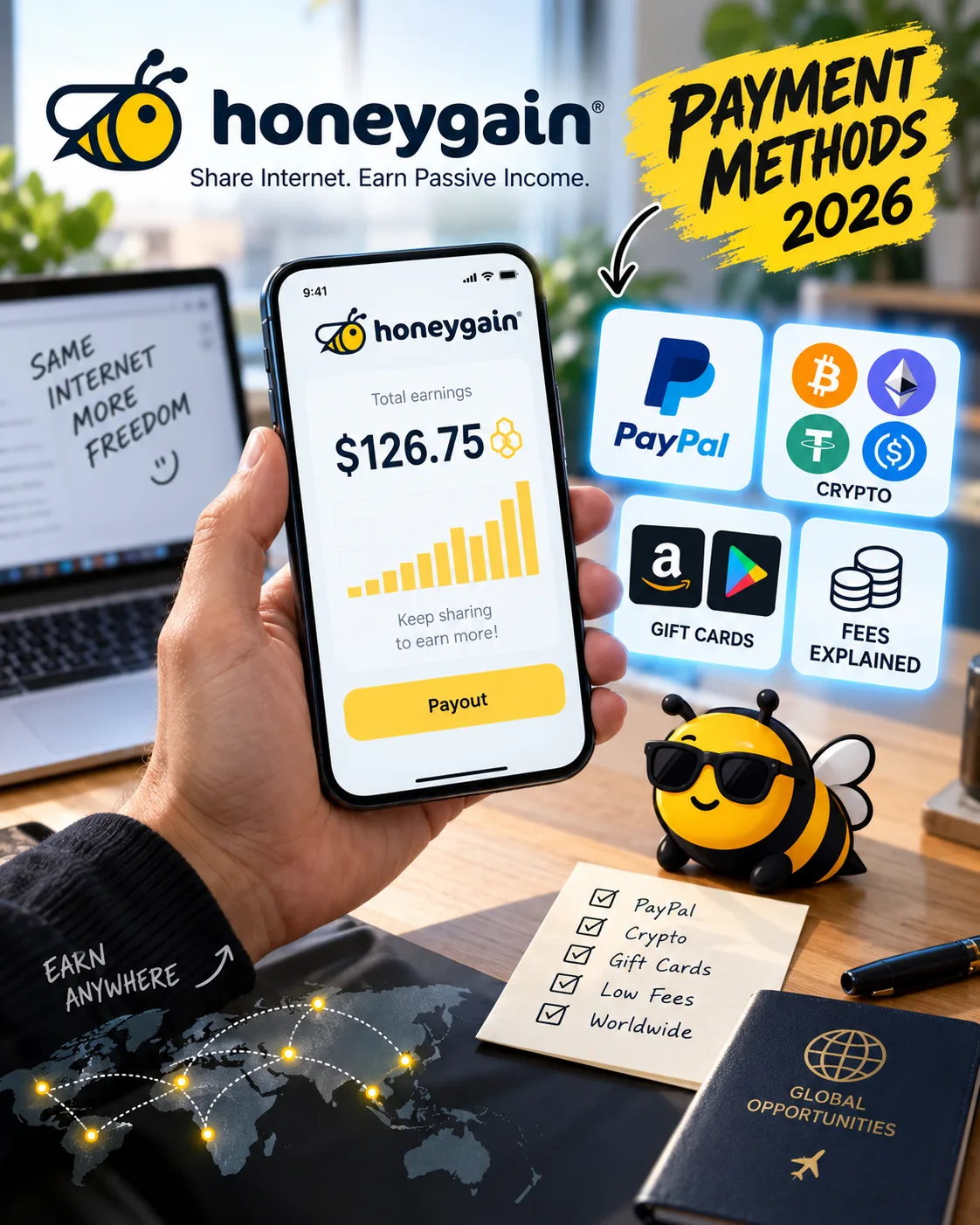
Honeygain Payment Methods 2026: PayPal, Crypto, Gift Cards & Fees Explained
 VERIFIED 2026
Honeygain vs EarnApp 2026: Which Pays More and Which Is Safer?
 VERIFIED 2026
IPRoyal Pawns, Peer2Profit & Repocket: The Bandwidth Apps That Actually Pay More Than Honeygain
 VERIFIED 2026