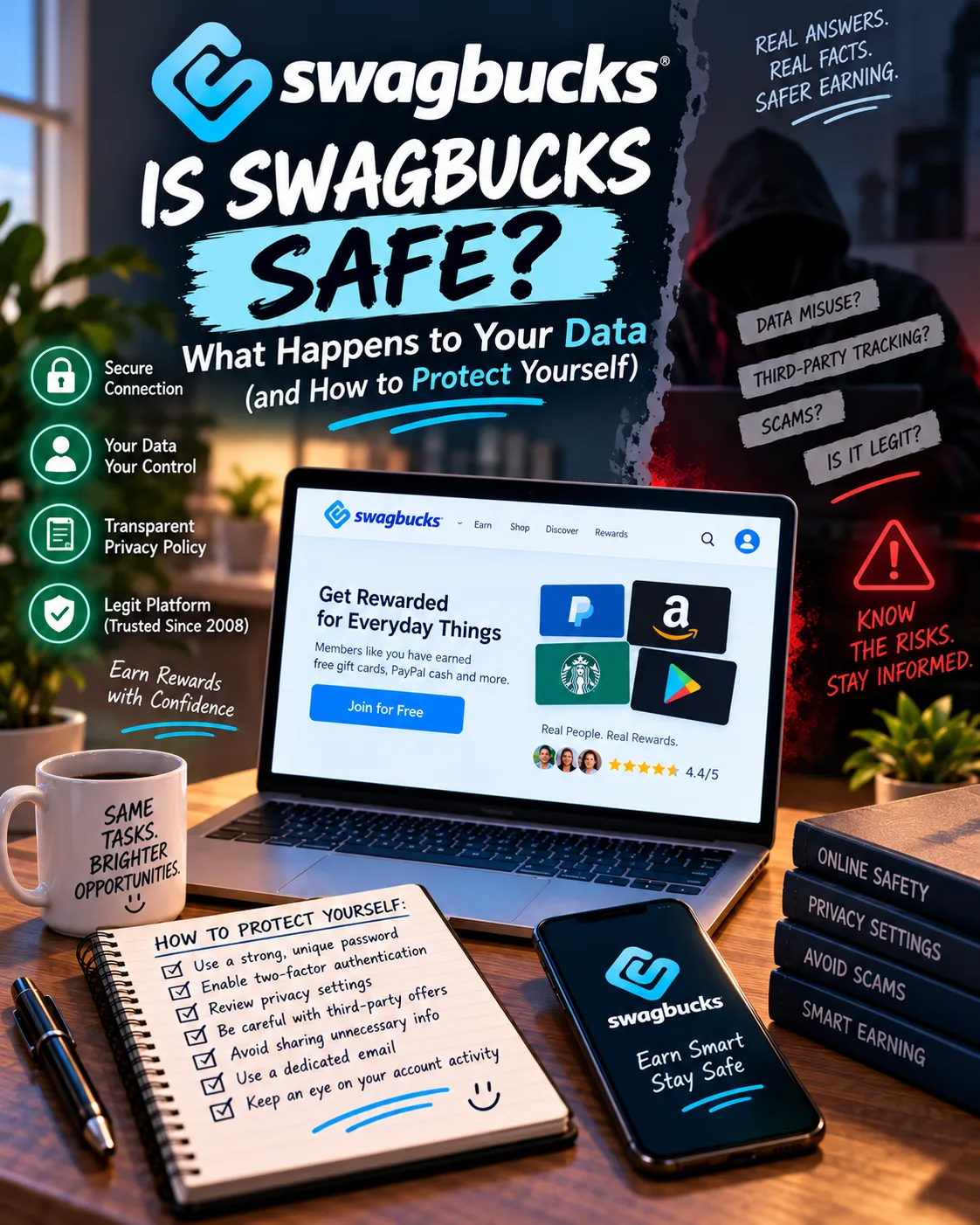
Is Swagbucks Safe? What Happens to Your Data (and How to Protect Yourself)
SwagBucks
 VERIFIED 2026
Quick answer
According to Swagbucks , the platform has been operating since 2008, has paid out over $832 million to more than 20 million members, and is owned by Prodege, LLC, a BBB-accredited company with a B+ rating. The platform uses SSL encryption, processes payments through established financial partners, and has fraud monitoring in place.
But "legitimate" does not mean "risk-free." And the main risk on Swagbucks is not losing money. It's what happens to your personal data.
Swagbucks builds comprehensive consumer profiles by combining data from surveys, shopping activity, video watching, web searches, and the SwagButton browser extension. That data is shared with survey providers, shopping partners, advertising networks, and market research firms. The platform also has a documented problem with phishing scams where fraudsters impersonate Swagbucks to steal personal information.
This is not a scam. It's the business model of GPT sites. But it's a trade-off worth understanding before you invest hours of your time.
Is Swagbucks Legitimate?
Yes. Swagbucks is operated by Prodege, LLC, a Nevada-based market research company. The platform has been active since 2008 and, according to publicly available data, has paid out over $832 million. It holds a Trustpilot rating of 4.0/5 based on tens of thousands of reviews, and the Google Play app has a 4.5-star rating and over 10 million downloads.
Prodege is BBB-accredited with a B+ rating. The company also operates MyPoints, InBoxDollars, Upromise, CouponCause, Swagbucks Live, and MyGiftCardsPlus — meaning your data may be shared across this entire network.
But legitimacy is not the same as transparency. And transparency is where Swagbucks — like most GPT platforms — falls short.
What Swagbucks Actually Collects About You
Swagbucks collects data at multiple levels. Here's what the platform and its privacy policy disclose:
1. Demographic data from surveys
Before you can earn meaningful amounts on Swagbucks, you have to fill out a demographic profile. This includes age, gender, ethnicity, income bracket, education level, household size, and market preferences. Every survey you complete adds to this profile.
2. Shopping behaviour
When you use Swagbucks for cashback shopping, the platform tracks your purchases, the stores you shop at, and the products you buy. This data is shared with retail partners and used for consumer insights.
3. Search history
If you use the Swagbucks search engine (powered by Yahoo), your search queries are collected and shared with search partners for ad targeting.
4. Video viewing and web activity
The SwagButton browser extension monitors browsing to activate cashback offers. But this also provides visibility into sites you visit beyond shopping. Video viewing data is used for interest profiling.
5. Device and location data
The Swagbucks mobile app requests 38 permissions, including:
- Precise location (GPS) and background location access
- Camera and microphone access
- Bluetooth scanning and pairing
- Read and write external storage
- Access to media collection
- Package usage statistics
- System alert window (can appear on top of other apps)
According to the Exodus Privacy report, the app contains 11 trackers and uses data for tracking across apps and websites owned by other companies.
6. Identity verification data
Swagbucks occasionally requests identity verification (IDV) to prevent fraud and unauthorized activity. This is handled by Persona, a third-party US company. Users are asked to provide a government-issued ID and a selfie. The process typically takes a few minutes but can require up to 10 business days for review.
For a full breakdown of the platform's earning methods and real hourly rates, see our Swagbucks review.
How Your Data Is Shared Across the Prodege Network
This is where the privacy picture becomes more complex. Swagbucks is not a standalone platform — it's part of the Prodege data network, which includes:
- MyPoints — Another GPT site
- InBoxDollars — Another GPT site
- Upromise — A college savings rewards platform
- CouponCause — A coupon platform
- Swagbucks Live — The trivia game
- MyGiftCardsPlus — A gift card marketplace
According to Prodege's privacy policy, your data may be shared across this entire network. This expands your data footprint beyond Swagbucks alone — a user who joins Swagbucks and later signs up for MyPoints may have their profiles merged or cross-referenced.
Beyond the Prodege network, your data flows to:
- Survey providers — The companies that commission the surveys you complete
- Shopping partners — Retailers where you earn cashback
- Advertising networks — For ad targeting based on your profile
- Market research firms — For consumer insights
The privacy watchdog Terms.Law gives Swagbucks a grade of F (20/100) for its privacy practices. The main concerns cited are multi-activity profiling, the Prodege data network, extensive partner sharing, and browser extension data.
For a deeper look at how Swagbucks's data-sharing compares to competitors, see our Swagbucks vs Freecash comparison.
The Phishing Problem: Fake Swagbucks Messages
Swagbucks has a documented problem with phishing scams where fraudsters impersonate the platform to steal personal information and money. The New York Times has covered the rise in scam text messages, and Swagbucks has published multiple warnings about brand impersonation.
What the scams look like
Fraudulent messages typically offer fake job opportunities — "remote product testers" earning "$100–$500 per day" — and ask you to reply to receive more details. They often come from phone numbers with international prefixes (Philippines, Canada, etc.) and arrive at odd times.
Other scams include:
- Fake Swagbucks Facebook accounts reaching out via direct message
- Text messages claiming to be from "Swagbucks Product Testing Team"
- Links to fake Swagbucks login pages designed to steal credentials
- Requests for payment to "unlock" rewards
Red flags: how to identify fake Swagbucks messages
Swagbucks has published a clear list of warning signs:
- Job offers via text — Swagbucks never sends employment opportunities through SMS
- Requests for personal information — Swagbucks never asks for SSN, bank details, or passwords via text
- Urgent payment demands — Legitimate Swagbucks communications never demand immediate payment
- Suspicious links — Always verify URLs end in swagbucks.com
- Poor grammar or spelling — Official communications are professionally written
Swagbucks also states clearly: "If someone claiming to be associated with Swagbucks requests your password, it is a scammer. Swagbucks will never ask you to provide a password."
Another critical rule: Swagbucks will only ask you to complete activity within your account on the official website (www.swagbucks.com). If you receive directions to do an activity outside of the Swagbucks site, it is almost certainly a scam.
For the step-by-step process on recovering a deactivated account, see our Swagbucks account ban guide.
How to Protect Yourself on Swagbucks
If you decide to use Swagbucks despite these risks, here's how to minimise your exposure:
- Use a dedicated email address. Don't use your primary email. Create a separate address specifically for GPT sites and other reward platforms.
- Use a unique password. Never reuse a password from another service. Use a password manager. Swagbucks will never ask for your password — if someone does, it's a scam.
- Do not click links in suspicious texts or emails. Always navigate directly to swagbucks.com rather than clicking a link claiming to be from the platform.
- Read the disclosure before opting in to data sharing. If a survey or offer asks for your email or contact details, a disclosure will explain how that data will be used. You can decline.
- Complete your profile honestly. Inconsistent answers trigger survey reversals, which can flag your account. Honesty here protects you as much as it protects the research.
- Review app permissions before installing. The Swagbucks app requests 38 permissions, including precise location, camera, and microphone. If you're not comfortable with this level of access, use the website instead of the app.
- Use the SwagButton cautiously. The browser extension monitors browsing to activate cashback offers. If privacy is a concern, avoid the extension and use the website directly.
- Cash out as soon as you hit the threshold. Don't accumulate a large balance. If your account is deactivated, you lose everything.
- Report suspicious messages. Forward scam texts to 7726 (SPAM) and file a complaint at ReportFraud.ftc.gov. Report fake Facebook accounts to Swagbucks support.
For more on maximizing your earnings while staying safe, see our Swagbucks payout guide and our survey disqualification guide.
Frequently Asked Questions
Does Swagbucks sell your data?
Swagbucks does not sell your personal information for marketing purposes. However, your survey responses, shopping behaviour, search history, and demographic data are shared with survey providers, retail partners, advertising networks, and market research firms. This data is used for consumer insights and ad targeting.
Is Swagbucks safe to use?
Swagbucks is legitimate and pays, but it carries privacy risks. It builds detailed consumer profiles and shares data across the Prodege network (MyPoints, InBoxDollars, etc.) and with third-party partners. The privacy watchdog Terms.Law gives it an F grade for privacy practices.
Why does Swagbucks ask for my ID?
Swagbucks requests identity verification (IDV) through Persona, a third-party US company, to prevent fraud and unauthorized activity. You may be asked to provide a government-issued ID and a selfie. The process typically takes a few minutes but can require up to 10 business days for review.
How do I know if a Swagbucks message is real?
Swagbucks never sends job offers via text, never asks for SSN, bank details, or passwords via text, and never demands immediate payment. Official communications come from swagbucks.com addresses, and all activity must be completed within your account on the official website.
Can I use Swagbucks without the mobile app?
Yes. The Swagbucks website is fully functional. Using the website instead of the app avoids the 38 app permissions, including precise location, camera, and microphone access.
What happens if I receive a scam text pretending to be Swagbucks?
Do not click any links or provide personal information. Forward the text to 7726 (SPAM) and file a complaint at ReportFraud.ftc.gov. Block the number and warn others.
Is Swagbucks GDPR-compliant?
Swagbucks has a Privacy Support team and provides opt-out mechanisms for marketing and some data sharing. However, core data collection is required for platform use, and the platform's primary compliance framework is not clearly stated. EU users have the right to request data access and deletion, but enforcement may be difficult for a US-based platform.
Get the Ultimate GPT Insider Guide🚀
Learn how survey disqualifications work and proven ways to qualify for more studies. 100% Free.
LootHub.org
Recommended posts
Continue with these related reward guides.
 VERIFIED 2026
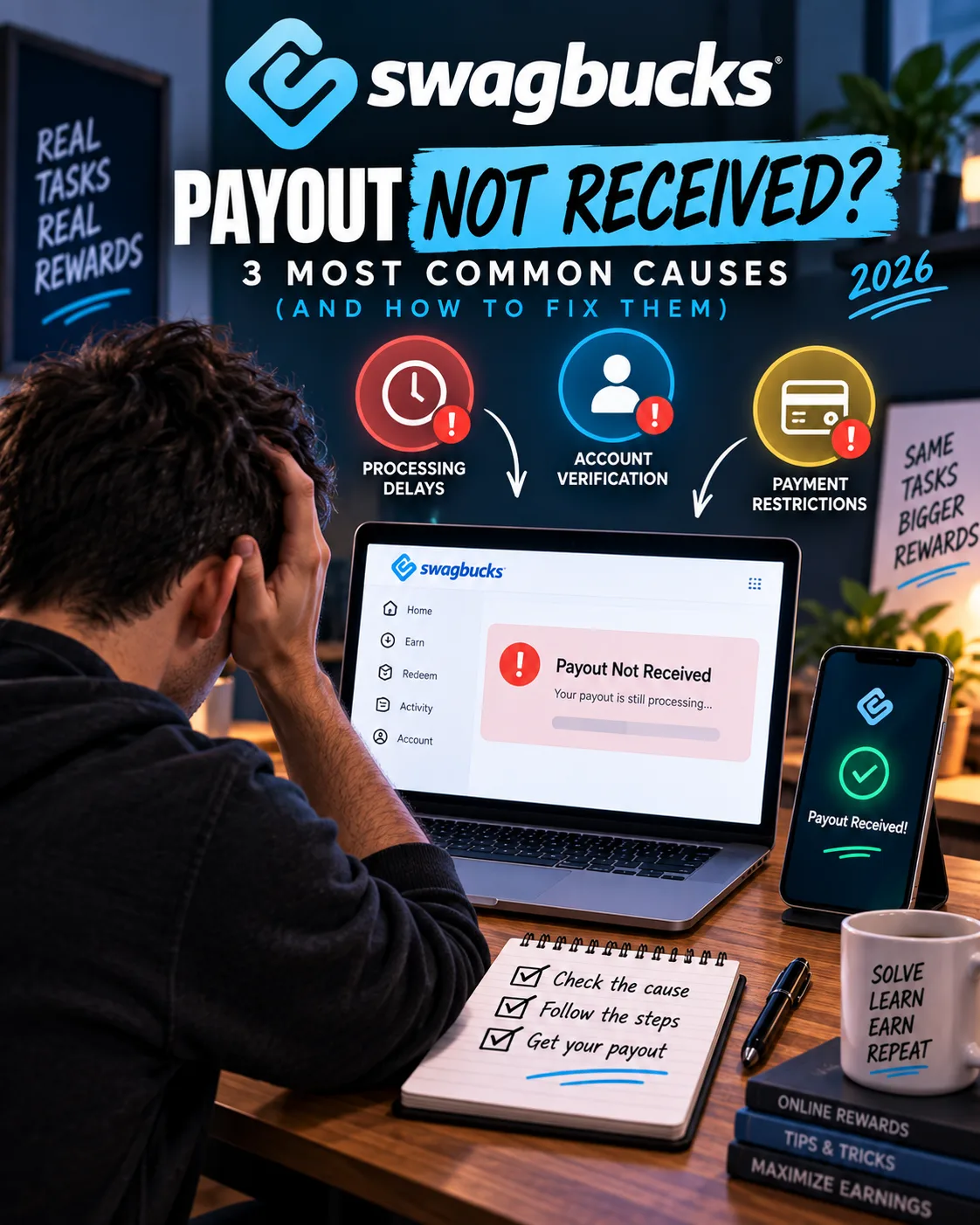
Swagbucks Payout Not Received? 3 Most Common Causes (and How to Fix Them)
 VERIFIED 2026
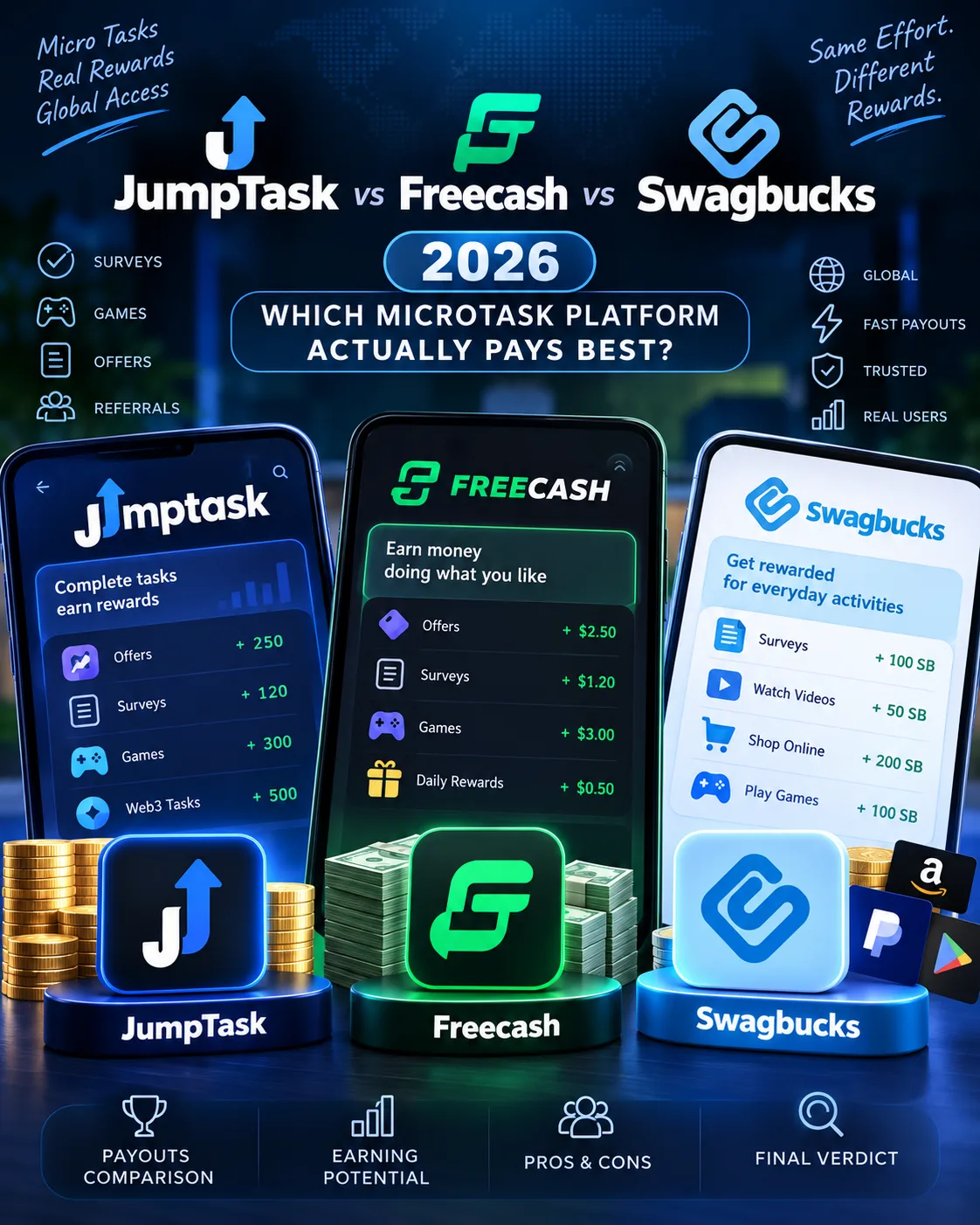
JumpTask vs Freecash vs Swagbucks 2026: Which Microtask Platform Actually Pays Best?
 VERIFIED 2026
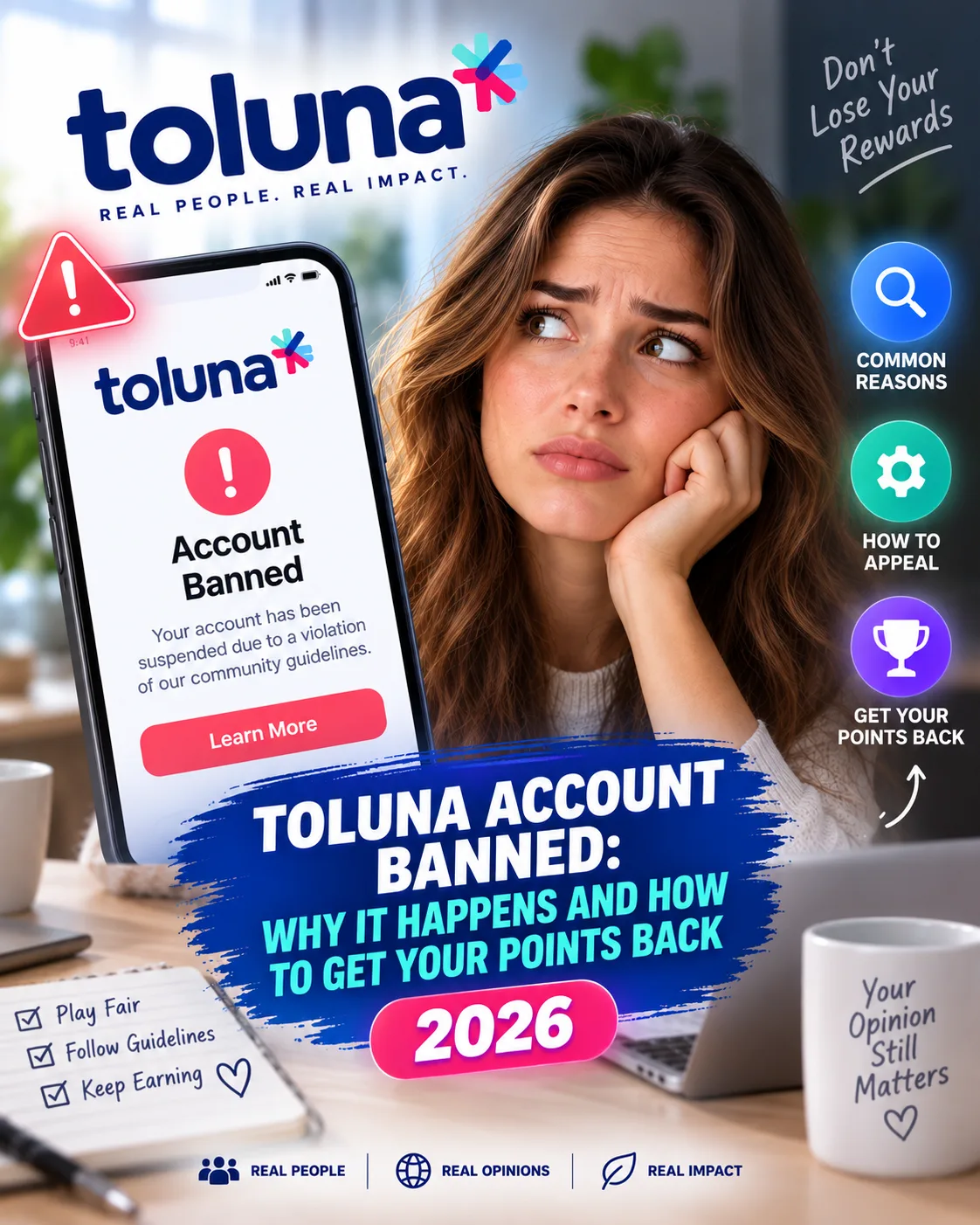
Toluna Account Banned: Why It Happens and How to Get Your Points Back (2026)
 VERIFIED 2026
Toluna Tips 2026: How to Actually Earn More Points (and Avoid Disqualification)
 VERIFIED 2026
Swag Codes Explained 2026: How to Find and Redeem Free SB Every Day
 VERIFIED 2026